Paper details
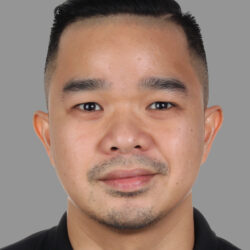
| Paper authors | Benigno Balgos |
| In panel on | Participation and Accountability in Humanitarian Disaster Management |
| Paper presenter(s) will be presenting |
In-Person / |
Abstract
This paper examines the policies, practices, and prospects of collaborative governance among state actors, civil society groups, and communities affected by disaster events. By looking at the post-Haiyan recovery and rehabilitation context, the paper identifies the avenues for collaboration as well as how participation and social accountability were played out. As a methodical approach, the paper initially mapped out the post-Haiyan humanitarian and development initiatives that had participation and social accountability as keywords. The paper then carried out a content analysis of the initiatives to understand the areas for participation and social accountability, particularly by affected communities. Similarly, interviews had been conducted with relevant actors from government, civil society, and communities. The paper argues that: first, participation and social accountability had become the buzzwords of many humanitarian and development interventions after Haiyan. Second, social accountability tools and mechanisms have been introduced by civil society groups to affected communities and used to monitor the delivery of services by government entities. Third, the tools developed were mainly used to assess government services to communities, but not the interventions initiated by civil society groups and humanitarian organizations. Lastly, community members have become actively engaged in post-disaster governance. However, ensuring the sustainability of collective action the moment when the humanitarian and development initiatives end still hangs in the balance.