Paper details
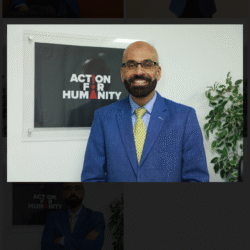
| Paper authors | Othman Moqbel, CEO of Action For Humanity |
| In panel on | Is the Humanitarian Subject Shifting? Rethinking Southern Leadership in Humanitarian Aid (Roundtable) |
| Paper presenter(s) will be presenting |
|
Abstract
The humanitarian system has long operated within a North-centric framework, where power, funding, and decision-making are concentrated in Western institutions. While this structure has enabled large-scale responses, it has also reinforced systemic imbalances, often sidelining the voices, knowledge, and leadership of actors from the Global South, even as their communities bear the brunt of crises.
Today, this paradigm is being redefined. Southern actors, from Türkiye and the Philippines to South Korea, Afghanistan, and Bangladesh are increasingly stepping forward, not just as implementers, but as leaders shaping humanitarian norms, strategies, and governance. Their contributions reflect a growing shift in power, as they assert agency in regional and global humanitarian spaces; in voice, as they produce knowledge rooted in lived experience; and in legitimacy, as they lead responses that resonate with local realities and needs.
Examples abound: Türkiye’s humanitarian diplomacy challenges traditional donor-recipient dynamics; the Philippines’ community-led disaster response models elevate local agency; South Korea’s transition from aid recipient to donor illustrates the transformative potential of developmental leadership. In Afghanistan and Bangladesh, local actors navigate complex political and humanitarian landscapes, often innovating under pressure and with limited resources.
Southern leadership is not yet a full alternative to the dominant model, but it is steadily reconfiguring it. Local institutions are gaining representation, shaping discourse, and leading responses in ways that challenge long-standing hierarchies. Yet, structural barriers persist; limited access to funding, compliance-heavy systems, and enduring biases toward “international” expertise.
This session invites a critical reflection on how power is distributed, whose voices are heard, and what constitutes legitimate leadership in humanitarian action. It calls for recognising Southern actors not as peripheral players, but as full partners; moving from recipients and implementers to co-architects of a more just, inclusive, and pluralistic humanitarian system.