Paper details
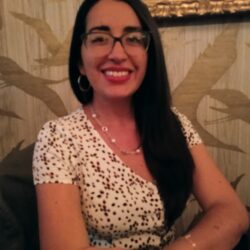
| Paper authors | Gabriela Villacis Izquierdo |
| In panel on | Is the Humanitarian Subject Shifting? Rethinking Southern Leadership in Humanitarian Aid (Roundtable) |
| Paper presenter(s) will be presenting |
In-Person / |
Abstract
In my research, I examine women's vernacular and ordinary practices during humanitarian crises in Colombia, positioning them as alternative forms of humanitarian action that operate alongside and outside the dominant Western humanitarian system. Drawing from PhD research conducted in Colombia, I analyse how these practices align with feminist care ethics. I challenge universalist, top-down, internationally-driven humanitarian approaches that impose standardised solutions on diverse humanitarian contexts. Instead, I advocate for situated responses that acknowledge specific local contexts, realities, values, and cultures. This framework rejects mainstream humanitarian assumptions about "proving" deservingness or vulnerability—requirements often imposed on affected populations, refugees, and forcibly displaced peoples without addressing underlying political structures of inequality and oppression. Amplifying the voices of Colombian women and feminists, I highlight their critique of short-term humanitarian interventions. These women demand comprehensive support extending beyond material aid kits or cash transfers, emphasising psychosocial support and pathways to economic autonomy as essential components of dignified humanitarian responses.
My research in Colombia illustrates how non-state actors have emerged to fulfill humanitarian duties traditionally assigned to the Colombian state. In this way, I expect to contribute to longstanding critiques of dominant humanitarian action while demonstrating how women's practices embody more holistic, contextually-grounded approaches to crisis response that prioritise dignity and long-term empowerment over short-term relief.