Lorrie Lynn King
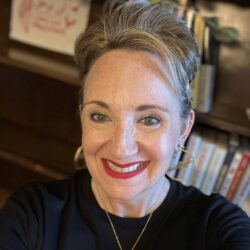
PhD Scholar
Gratz College
| Location | Decatur, United States of America |
| Gender and Title | Female, Professor |
| Members only | |
| Telephone | Members only |
| Website | |
| Bio | Lorrie Lynn King is Arab-Jewish genocide scholar and humanitarian practitioner with nearly 30 years of experience across 40+ countries and 15 Indigenous Nations. Her work bridges global health, gender justice, community development, and psychosocial support for survivors of conflict and mass atrocity. Fueled by the ancestral fire of resistance—from the Levant to County Galway—she has led humanitarian and development programming with organizations such as the United Methodist Committee on Relief (UMCOR), the American Red Cross, and CARE Rwanda—where she developed the national model for HIV/AIDS case management in collaboration with the Rwandan Ministry of Health, supporting the rollout of universal access to HIV/AIDS medications in a post-genocide context. She also co-created The Coffee Klatch, a participatory psychosocial support program for Arabic-speaking refugee women, recognized by the CDC as a best practice in refugee resettlement. She teaches courses in public health, global development, genocide studies, and decolonial practice at Agnes Scott College and Emory University (Atlanta, GA USA). Her PhD scholarship focuses on mandating Mental Health and Psychosocial Support (MHPSS) within humanitarian response and transitional justice frameworks. Her current conference presentations and forthcoming publications explore The Pedagogy of Now, a framework she developed for mainstreaming genocide and atrocity education; as well as her lived experiences teaching and leading interfaith initiatives – including Jewish-Muslim solidarity for Palestine, in the wake of October 7th, ironically her birthday. Her approach is grounded in field realities, shaped by decades of frontline experience, and committed to justice-centered, survivor-led models of care. She believes deeply in bridging practice, policy, and pedagogy to build more accountable, responsive, and human-centered humanitarian systems. |
Expertise
| Expertise | Country | Affiliation | Local |
|---|---|---|---|
| Conflict | Armenia, Cambodia, India, Iraq, Kenya, Liberia, Nepal, Nicaragua, Palestine, State of, Rwanda, South Africa, South Sudan, Sri Lanka, Sudan, Uganda, United States |

|
|
|
I’m an Arab-Jewish genocide scholar and humanitarian practitioner with nearly 30 years of experience across 40+ countries and 15 Indigenous Nations. My work bridges global health, gender justice, community development, and psychosocial support for survivors of conflict and mass atrocity. With ancestral roots in Iraq, Syria, and the greater Levant, I’ve led humanitarian and development programming with organizations like the United Methodist Committee on Relief (UMCOR), the American Red Cross, and CARE Rwanda. I co-created The Coffee Klatch Effect, a participatory psychosocial support program recognized by the CDC as a best practice in refugee resettlement. I also teach courses in public health, global development, genocide studies, and decolonial practice at Agnes Scott College and Emory University. Currently, I’m pursuing my PhD in Genocide Studies at Gratz College, where my research focuses on mandating Mental Health and Psychosocial Support (MHPSS) within humanitarian response and transitional justice frameworks. My approach is grounded in field realities, shaped by decades of frontline experience, and committed to justice-centered, survivor-led models of care. I believe deeply in bridging practice, policy, and pedagogy to build more accountable, responsive, and human-centered humanitarian systems. |
|||